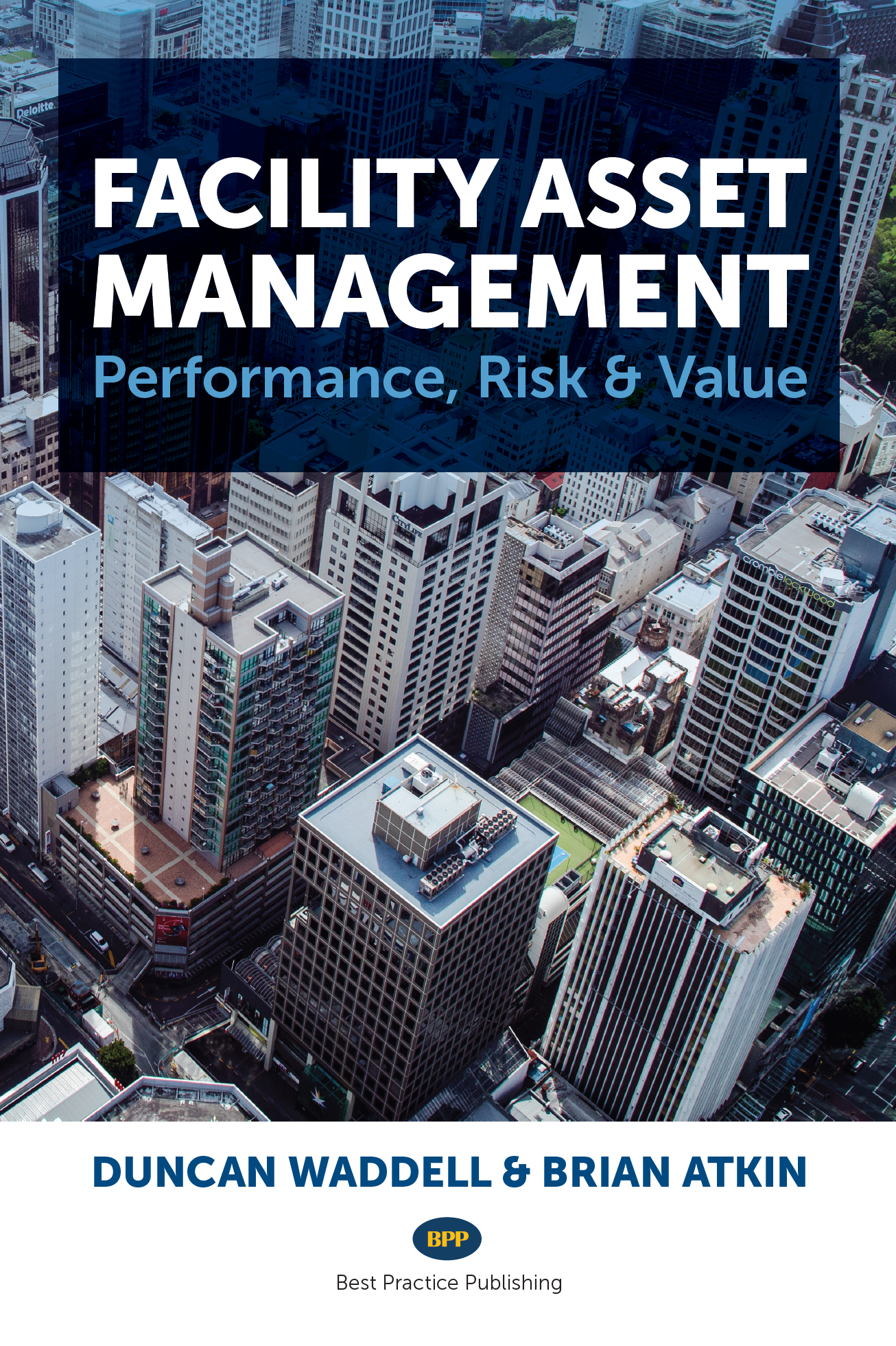
Get your copy!
BUY NOW FROM THE BPP MAIN WEBSITEAlso available from all good booksellers including Amazon
eBook available across multiple platforms including Amazon Kindle, Apple Books, NOOK and Rakuten Kobo
FIRST EDITION
Introducing the new integrated discipline of Facility Asset Management
There is growing acceptance that professional and technical silos in the built environment continue to hinder the achievement of optimal performance and value realisation for owners, operators, owner-operators and major tenants. This ground-breaking book defines the core principles of facility asset management, providing a comprehensive guide to an integrated approach that moves beyond disparate management practices to maximise the value of all organisational assets. In today’s dynamic business environment, breaking down departmental silos is crucial for success, and this book shows how to achieve integration of processes, functions and outputs. It offers a robust framework for understanding asset life cycles, criticality, reliability and risk, where data-driven decision-making is enhanced by artificial intelligence and machine learning.
Readers will understand how to move from simply maintaining facilities and their assets to managing them strategically as key drivers of performance and value, contributing directly to organisational goals and business objectives. Significant among the topics covered in this book are predictive maintenance, life cycle cost appraisal, risk management, change management, resilience, business continuity, disaster recovery, workflow automation, smart buildings, digital twins and blockchain technology within the context of sustainable development and practices. This book will equip readers with the knowledge, insights and techniques needed to optimise asset performance, reduce risk and maximise value.
Not sure about FAM? Find out here
DOWNLOAD FAM INSIGHTS (7 Mb PDF)WATCH THE FAM INSIGHTS VIDEO (3 mins)FACILITY ASSET MANAGEMENT
The book’s sub-title Performance, Risk & Value is for good reason – read it and find out why
Raise the level of understanding, get FAM on the corporate agenda, secure the decision then implement
BROWSE THE CONTENTSReviews
Don’t take our word for it – here’s what industry leaders have to say
“An exceptional book combining the key fundamental components of Facility Asset Management. This book creates the catalyst to assist asset investors and owners to consider their strategies for their respective portfolios. A must read for all industry stakeholders.”
Steve Taylor
Australia
“An inspiring facility asset management vision and a practical guide, this book is for any facility leader determined to drive value, sustainability and innovation to prepare for the future of the built environment.”
Jim Whittaker
United States
“This book will deliver added value irrespective of who you are and what experience you have. There is value in it for all who work within the built environment sector. The book demonstrates how two professional disciplines combined will enable real long-term value to be delivered.”
Stan Mitchell
United Kingdom
Intended readership
Facility Asset Management is aimed at business leaders, senior managers, asset managers, facility managers, technical experts, consultants, researchers and academics seeking to understand and implement effective management of the built environment.
BUSINESS LEADERS
Understand the broadened scope that FAM represents and which is vital for strategic decision-making. Go beyond basic cost control to recognise the interconnectedness of all resources that contribute to long-term value creation for the organisation.
FAM PROFESSIONALS
Offers a lens through which to view responsibilities including a structured framework for prioritising maintenance activities and allocating resources effectively. Gain insight into optimal FAM strategies based on asset criticality and budget constraints.
SENIOR MANAGERS
Recognise the importance of a life cycle perspective that shifts thinking and practice from short-term cost savings to long-term value creation. Translate complex operational realities into easy-to-understand actions with metrics that demonstrate their value.
EXPERTS & CONSULTANTS
Technical experts benefit from appreciating how different asset types interact within operational processes. Consultants can exploit this understanding to provide impactful advice, while academics can further explore the theoretical underpinnings.
Chapters
Browse the summaries of the book’s chapters and appendices – note that chapter names have been abbreviated
1. BREAKING DOWN SILOS
Establishes the foundational rationale and groundwork for FAM, emphasising the shift from siloed approaches to a comprehensive methodology to optimise performance throughout the life cycle of facilities and their assets.
2. UNDERSTANDING VALUE
Moves practice away from having assets to understanding them and their value, outlining a holistic approach to informed decision-making, optimised resource allocation and value maximisation throughout the life cycle.
3. FM PERSPECTIVE
Goes beyond simply maintaining buildings to create environments that support organisational goals, optimise operational efficiency and enhance occupant wellbeing, based on data-driven decisions utilising data analytics.
4. AM PERSPECTIVE
Focuses on the proactive management of risk and optimisation of asset performance throughout the life cycle, moving away from a “fix it when it breaks” mindset to one that is proactive and which prioritises asset criticality.
5. DATA – THE CORNERSTONE
Argues that it is less about collecting data and more about exploiting quality data, by ensuring that it is accurate, complete, consistent and valid to drive performance, reduce risk and maximise value throughout the life cycle.
6. ENABLING TECHNOLOGY
Digitally transforms FAM into a core driver of value creation that creates better occupant experience, improved performance, reduced costs and which promotes sustainability by augmenting, not replacing, human capabilities
7. PROCESSES & WORKFLOWS
Emphasises that successful FAM depends on well-defined processes, effective workflows and, crucially, the breaking down of silos, by requiring standardisation, automation and data analytics.
8. LIFE CYCLE & COST
Stresses the importance of FAM as a strategic financial driver that involves rigorous measurement and demonstration of ROI, by establishing a financially sound approach that amounts to more than controlling costs.
9. EXTERNAL SERVICES
Leads the industry shift towards a more developed approach to “externally provided processes, products, technologies and services” than is normally experienced by “outsourcing” and its basic transactional approach.
10. SUSTAINABILITY
Promotes integrated sustainability and resilience as more than a responsible organisational practice, which is essential for long-term survival and success in the face of escalating climate risks and global disruptions.
11. RISK MANAGEMENT
Underscores the dual imperatives of risk awareness and operational readiness in building organisational resilience through proactive risk management and business continuity planning including disaster recovery.
12. SMART BUILDINGS
Examines the convergence of smart building technologies and evolving work environment strategies to create more efficient, sustainable and occupant-centric environments, with FAM playing a central role in this transformation.
13. EMERGING TECHNOLOGIES
Reveals a rapidly evolving field where technology is going beyond supporting FAM to fundamentally reshape it, with an emphasis on FAM professionals as data analysts, strategic thinkers, technology enthusiasts and leaders
APPENDICES
Defines many of the technical terms used in the context of FAM, explores a the asset register, KPI categories for FAM as well as providing a useful checklist for considering relevant standards and regulations.
BIBLIOGRAPHY & INDEX
Provides a comprehensive listing of international standards (ISO) applicable to FAM, other publications and further reading based on respected texts. The book’s index includes more than 1,300 key words and terms.
The Authors
Duncan Waddell & Brian Atkin
Duncan Waddell has a professional background in business management, initially working in the industrial manufacturing sector, then moving into the built environment sector in 1985. The career change led him to the field of facility management, a relatively new area of management focus at that time. He founded an organisation that provided strategic advisory services in Australia and then expanded internationally in providing consulting, as well as learning and development courses, across the facilities, asset and property management fields. Duncan is a founding member of the Facility Management Association in Australia where he held the roles of a director and chair and was awarded life membership. He has actively promoted FM internationally in roles such as a director and chair of Global FM. Duncan is the current chair of ISO/TC 267 – Facility Management, the ISO committee responsible for the ISO 41000 series of standards.
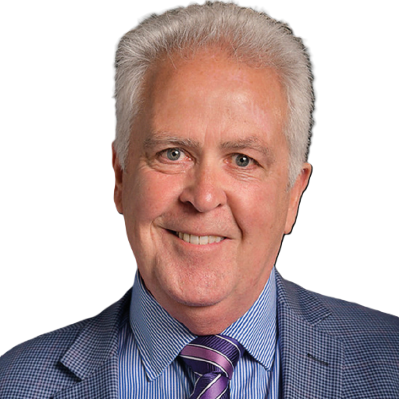
Duncan Waddell
Brian Atkin holds a doctorate from the University of Reading in the UK and a master’s degree by research into the costs of major engineering infrastructure. His research, training and consultancy activities extend across the entire life cycle of built assets, from acquisition and planning, through delivery of assets, to their operation, use, maintenance and end of life. Brian has held professorial or visiting fellow positions in the UK, Sweden, Australia, Iceland and Finland. As a member of the British Standards Institution (BSI) FM Technical Committee, he has been closely involved in the drafting of national standards. In addition, he represents BSI on ISO/TC 267 – Facility Management, the ISO committee responsible for the ISO 41000 series of standards, where he has been similarly involved in standards’ development. Brian is co-author of Total Facility Management, published by Wiley, and is the author of numerous research papers and reports.

Brian Atkin
Any questions for us?
If there is anything you would like to ask the authors or us, please use the form below. We’ll do our best to get back to you as soon as possible.